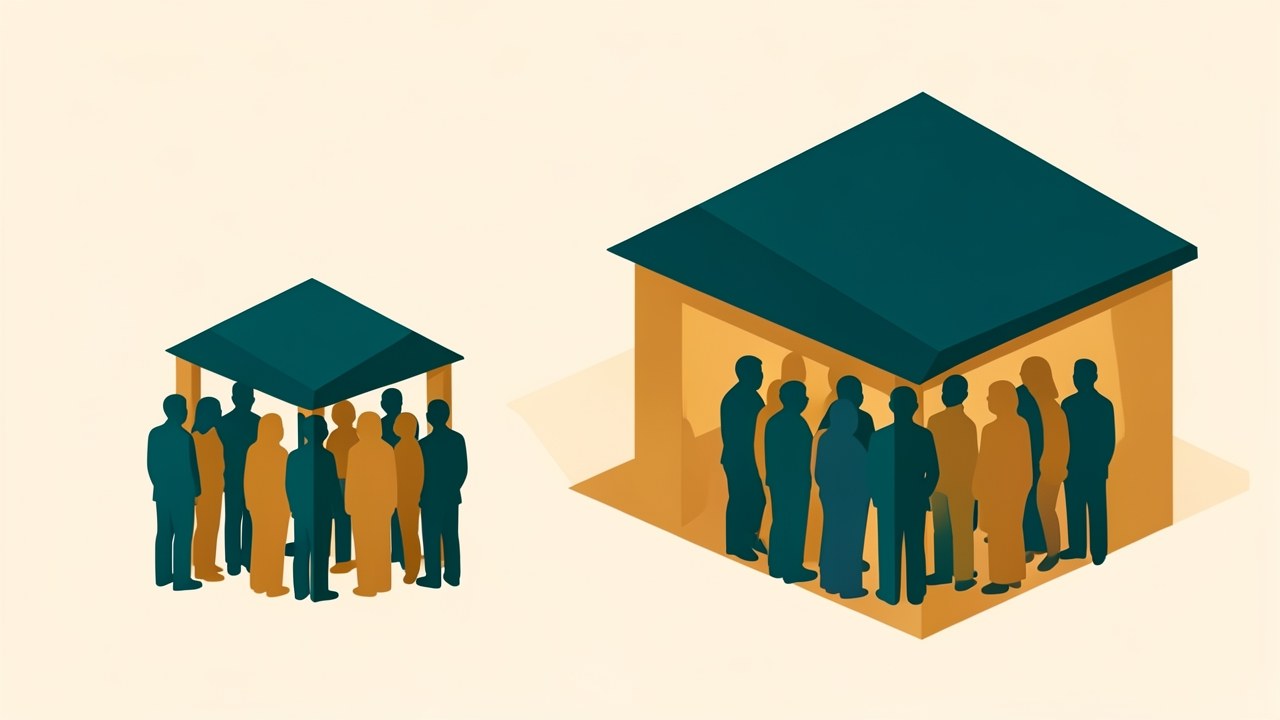
Why credit unions are a safer option for bad credit
When you have bad credit, a credit union can be a more affordable and flexible source for a personal loan than many online lenders or payday lenders. Credit unions are nonprofit, member-owned cooperatives, and they reinvest profits back into the organization, which can result in lower interest rates on loans. They also tend to have more flexibility than banks when providing personal loans to people with bad credit or no credit.
For federal credit unions, the maximum APR on any loan that is not an official payday alternative loan (PAL) is 18%. That cap is significantly lower than the triple-digit APRs often charged by payday lenders and many online bad-credit lenders. Additionally, some credit unions offer free financial counseling services to their members, which can help you manage your finances and improve your credit over time.
- Nonprofit, member-owned structure with potential for lower rates
- More flexibility than banks for borrowers with bad credit
- Federal credit union rate cap of 18% APR for non-PAL loans
- Optional free financial counseling for members
Sources: MyCreditUnion.gov (NCUA), Credit Union of Southern California (CU SoCal)
Eligibility and membership requirements
To get a loan from a credit union, you must first become a member. Credit unions have field of membership rules—they serve people who share a common bond, such as living in a certain area, working for a specific employer, or belonging to an organization. You can typically join a federal credit union with a small deposit (often $5 or more) in a share account, which makes you a part-owner.
Membership itself does not require a good credit score. Many credit unions are willing to work with members who have bad credit, though they may consider your credit history as part of the loan decision. For a payday alternative loan (PAL), federal rules require that you have been a member of the credit union for at least one month before you can apply. Other eligibility criteria for a PAL may include being at least 18 years old, having a steady income, and being in good standing with the credit union—though these can vary by institution.
- Join by opening a share account with a small deposit
- Membership may be based on geography, employer, or organization
- Bad credit does not automatically disqualify you from membership
- For PALs, you must be a member for at least one month
Sources: MyCreditUnion.gov (NCUA), The Credit People
Types of credit union loans (including PALs)
Federal credit unions offer two main types of personal loans to members: standard personal loans (which fall under the general 18% APR cap) and payday alternative loans (PALs). PALs are designed to provide a lower-cost alternative to payday loans and are regulated by the National Credit Union Administration (NCUA).
PALs have specific federal rules: the loan amount must be between $200 and $1,000, the term must be between 1 and 6 months, and the maximum APR is 28%. A credit union may charge an application fee for a PAL, but it cannot exceed $20, and the fee can only be the amount needed to recoup actual processing costs. You can have up to three PALs within a six-month period, as long as no PAL overlaps with another and you do not roll over a loan.
Some credit unions also offer credit builder loans, which are designed to help members build or improve their credit. With a credit builder loan, the borrowed funds are held in a share account while you make payments; once the loan is paid off, you receive the funds and your on-time payments may be reported to credit bureaus.
- Standard personal loans with a maximum APR of 18% (federal credit unions)
- Payday alternative loans (PALs) with a maximum APR of 28%
- PAL amounts: $200–$1,000; terms: 1–6 months
- Application fee for a PAL capped at $20
- Up to three PALs in a six-month period (no overlap or rollover)
- Credit builder loans to build credit over time
Sources: MyCreditUnion.gov (NCUA), The Credit People, Credit Union of Southern California (CU SoCal)
Rate caps and typical terms
Federal credit unions are subject to rate caps set by the NCUA. For any loan that is not a payday alternative loan, the maximum APR is 18%. For payday alternative loans, the maximum APR is 28%. These caps provide a significant cost advantage compared to payday lenders, which can charge annual percentage rates in the triple digits.
PALs also have fixed terms: 1 to 6 months, with loan amounts from $200 to $1,000. The application fee is capped at $20. In contrast, standard personal loans from credit unions may have longer terms and higher amounts, but your specific rate and terms depend on the credit union and your creditworthiness.
| Loan type | Maximum APR | Loan amount | Term | Application fee cap |
|---|---|---|---|---|
| Payday alternative loan (PAL) | 28% | $200–$1,000 | 1–6 months | $20 |
| Other personal loan | 18% | Varies by credit union | Varies by credit union | Varies by credit union |
Sources: MyCreditUnion.gov (NCUA)
How to apply for a credit union loan
The process of getting a credit union loan with bad credit involves a few practical steps. First, you need to find a credit union you are eligible to join. You can start with local credit unions, employer-based credit unions, or use online search tools. Once you identify a credit union, you will need to become a member by opening a share account and meeting any membership criteria.
After you have been a member (for at least one month if you are applying for a PAL), you can apply for a loan. You will typically need to provide personal identification, proof of income, and information about your existing financial obligations. Some credit unions may offer prequalification or online applications, but the exact process varies.
For a PAL, the application fee cannot exceed $20, and the credit union must have you as a member for at least one month before you can receive the loan. Once approved, funding is often available within 1 to 3 business days, though this can vary by credit union.
- Find a credit union you are eligible to join (based on location, employer, or other common bond).
- Become a member by opening a share account with the required minimum deposit.
- Wait at least one month before applying for a payday alternative loan (if that is the product you want).
- Gather your personal documents, income proof, and details about your debts.
- Submit a loan application online, in person, or by phone, and pay any allowed application fee (max $20 for a PAL).
- Receive your funds, typically within 1–3 business days after approval.
Sources: MyCreditUnion.gov (NCUA), The Credit People
Comparing credit unions to other lenders
When you have bad credit, you have several options for a personal loan: online lenders, banks, payday lenders, and credit unions. Credit unions often stand out because of their nonprofit structure and federal rate caps. While online lenders may offer quick approval and funding, they often charge APRs well above 30% for bad-credit borrowers, and payday lenders can charge triple-digit APRs.
Banks may have stricter credit requirements and may not be as flexible as credit unions. Credit unions, by contrast, are known for working with members who have bad credit, and they offer financial counseling that can help you improve your financial situation. The trade-off is that you must become a member and meet the credit union's field of membership rules before you can borrow.
When comparing lenders, always look at the APR, fees, and loan terms. For federal credit unions, you know that the APR will not exceed 18% (or 28% for a PAL), which gives you a clear ceiling. Online lenders may not have such caps, so you need to review their rates carefully.
- Credit unions: nonprofit, lower rate caps, membership required
- Online lenders: fast funding, but often higher APRs
- Banks: may have stricter credit requirements
- Payday lenders: very high APRs, avoid if possible
Sources: MyCreditUnion.gov (NCUA), Credit Union of Southern California (CU SoCal)
Frequently asked questions
Can I join a credit union if I have bad credit?
Yes, you can join a credit union even if you have bad credit. Credit unions are member-owned cooperatives that serve a defined community, and membership is based on factors such as where you live, where you work, or your affiliation with a group. Opening a share account with a small deposit is typically all it takes to become a member. A bad credit history does not prevent you from joining, and many credit unions are willing to consider loans for members with imperfect credit.
Sources: Credit Union of Southern California (CU SoCal)What is a payday alternative loan and how does it work?
A payday alternative loan (PAL) is a small-dollar, short-term loan offered by federal credit unions as a lower-cost alternative to payday loans. PALs are regulated by the NCUA, and the maximum APR is 28%—far lower than typical payday loan APRs. Loan amounts range from $200 to $1,000, and terms are 1 to 6 months. You must be a credit union member for at least one month before you can apply. The application fee is capped at $20, and you can have up to three PALs in a six-month period, as long as no loans overlap or are rolled over.
Sources: MyCreditUnion.gov (NCUA), The Credit PeopleDo credit unions check credit scores?
Yes, credit unions generally check your credit history when you apply for a loan, but they may be more flexible than banks. For a payday alternative loan, the NCUA requires that you be a member for at least one month, but credit unions may consider your income and relationship with the credit union in addition to your credit score. Some credit unions also offer credit builder loans to help you build credit, but they still review your credit history as part of the application.
Sources: The Credit People, Credit Union of Southern California (CU SoCal)How long does credit union loan approval take?
Approval times can vary by credit union, but once you have submitted a complete application, funding is often available within 1 to 3 business days. For payday alternative loans, you must be a member for at least one month before applying, so the overall timeline includes that waiting period. Some credit unions may offer same-day or next-day decisions, but it is best to ask your credit union for its specific timeline.
Sources: The Credit PeopleWhat are the eligibility requirements for a PAL?
Federal credit unions are required to have you as a member for at least one month before you can receive a payday alternative loan. Beyond that, individual credit unions may set additional requirements, such as being at least 18 years old, having a steady income, and being in good standing with the credit union. These requirements can vary, so it is important to check with the specific credit union.
Sources: MyCreditUnion.gov (NCUA), The Credit PeopleSources
- Payday Alternative Loans — MyCreditUnion.gov (NCUA)
- Can Credit Unions Offer Payday Alternative Loans? — The Credit People
- How Hard Is It To Get A Personal Loan? Is It Easy? — Credit Union of Southern California (CU SoCal)